
There has been a massive security movement around the web that is focusing on encrypting websites using HTTPS. HTTPS (Hypertext Transfer Protocol Secure) is a mechanism that is used to securely connect your browser or app to a website. This is extremely important for websites that collect and store information from its users. The HTTPS mechanism relies on SSL or TLS encryption in order to protect the connection. Once these encryptions are implemented, they will protect your website against threats such as eavesdroppers, website hijackers, and man-in-the-middle attacks.
In February 2017 we learned that this movement has reached its half-way mark. Google is reporting that more than half of its desktop users load a website using an HTTPS connection and that mobile will soon be right there with it.
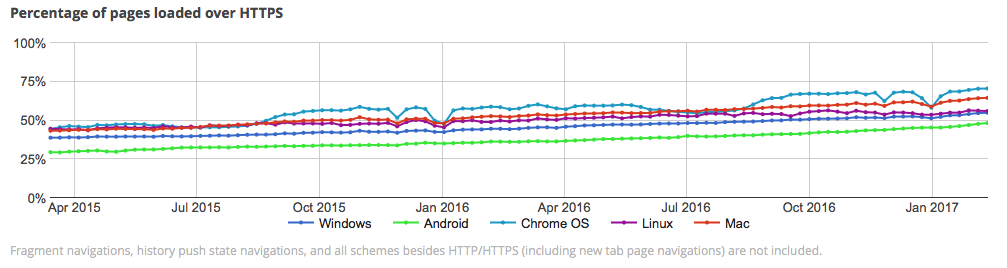
Source Reference: https://www.google.com/transparencyreport/https/metrics/?hl=en
Firefox is reporting an increase in HTTPS traffic as well.
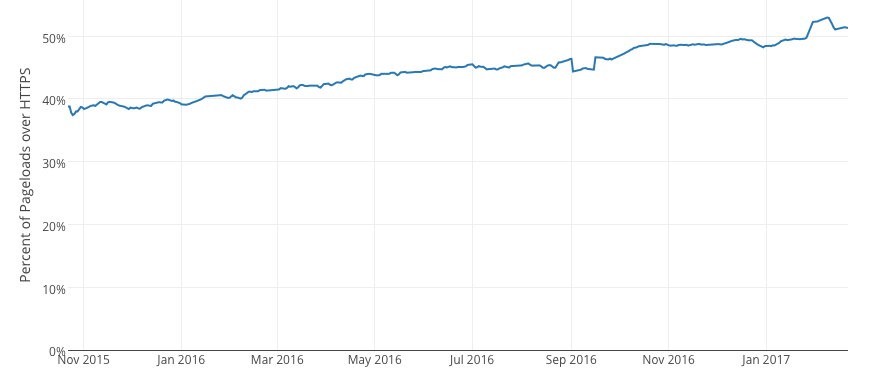
Source Reference: https://letsencrypt.org/stats/
HTTPS is important for many reasons. One reason being security. When you surf around online you are traveling through different networks. Some networks can become hacked and therefore unstable. If a network becomes unsecured, they become vulnerable to exploits and hacks. If you accidently cross paths with one of these vulnerabilities, you too can be attacked and exploited. Encryption is a defense against these unsecured networks and hackers. Encrypted communications can still be intercepted but their contents will be unintelligible.
HTTPS is also important for search engine optimization (SEO). Security is a top priority for search engines such as Google and Bing. Google, in particular, is working to make the Internet safer for everyone by making sure that websites people access from Google are secure. Google has called for "HTTPS Everywhere" which means that all communication should be secure always and by default. If you follow Google's guidelines and have a secure website you will be rewarded in your search engines rankings. Since August of 2014, Google has been using HTTPS as a ranking signal. Currently, this update is affecting fewer than 1% of global inquiries - as they want to give time for web owners to switch over to HTTPS however, this may change over time as they encourage all websites to be secure.
The fact that we have reached the halfway mark into encrypting all websites is a major accomplishment and creates a safe environment for all who surf the web. Web sites that are not encrypted leave users open to malicious threats and vulnerabilities. If you would like more information regarding HTTPS please feel free to contact us below.
Related articles

Give Your Website a Job: 3 Questions to Answer Before You Redesign
Before you redesign, define what your website needs to do. Our UX strategist shares 3 questions that turn vague goals into real design decisions.

Why a Working Proof of Concept Isn’t a Finished Product
A working proof of concept is only the beginning. Learn how UX design can turn a functional product into a clear, intuitive, and useful experience.

Your flight is delayed. Welcome to User Experience
Imagine landing in an unfamiliar airport with only minutes to make your connection. You rely on clear signage and familiar patterns to get where you need to go. Websites and digital products work the same way—good user experience anticipates needs, reduces friction, and guides users toward their goals. UX isn’t just visual polish; it’s the thoughtful design that builds clarity and trust with every interaction.